
By Andre Thomas, NASM CPT | The F.I.T.T. PIT | June 19, 2026
Balance Exercises for Women Over 40 (And Why They Predict How Long You'll Live)
You can deadlift. You can survive a spin class. But can you stand on one foot for 10 seconds without grabbing the counter? Most women over 40 cannot, and they have no clue it means anything. Balance exercises for women over 40 are the part of training nobody posts about and almost everybody skips. They are also the closest thing to a longevity test you can run barefoot in your kitchen tonight.
The 10-second test that says more than your bloodwork
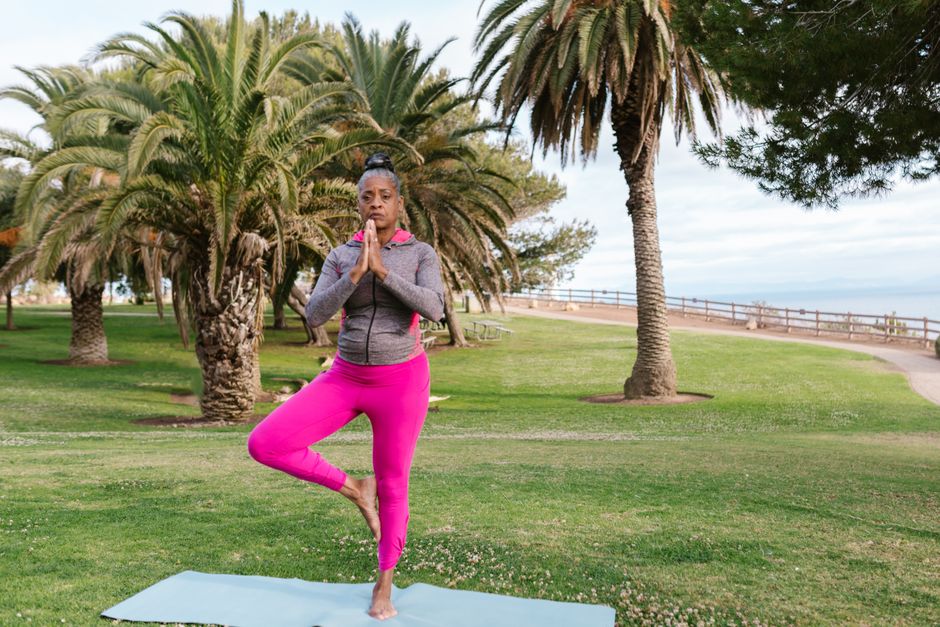
Here is the test. Stand on one leg. Rest the top of your free foot against the back of your standing calf. Let go of the wall. Count to 10.
Sounds easy. For a lot of grown adults, it is not.
In 2022, researchers followed more than 1,700 people for years and found that the inability to balance on one leg for 10 seconds nearly doubled the risk of dying over the next decade. Not from tripping. From everything. The people who could not hold the pose tended to be sicker and weaker than the ones who could.
One foot. Ten seconds. That little test reads your nervous system, your strength, and your coordination all at once. And you can find out where you stand right now. Literally.
Why your balance falls apart after 40
Balance is not a fixed trait you are born with. It is a skill. And like every skill, it rusts when you stop using it.
Three things gang up on you after 40. First, you lose muscle. Without training you drop strength in your legs and hips year after year, and weak legs cannot catch you. That is the same muscle loss after 40 that quietly steals your power. Second, your nerves get slower. The signals from your feet to your brain take longer, so your corrections show up late. Third, the systems that hold you upright, your inner ear and your eyes, drift with age.
Here is the good news. Falling is not your destiny. The CDC reports that one in four adults 65 and older falls every year, and they are blunt that falls are not a normal part of getting old. Balance is trainable at any age. The National Institute on Aging lists balance as one of the four types of exercise every adult needs, right next to strength. Most women train zero of it.
What balance training actually does inside your body
When you balance on purpose, you are coaching your nervous system, not just your muscles.
Balance work sharpens your proprioception and the balance system in your inner ear. Proprioception is your body's sense of where it is in space without looking. It is why you can touch your nose with your eyes closed. That sense fades with age, and balance training brings it back online.
You also build the small stabilizing muscles around your ankles, knees, hips, and spine. Those are the muscles that fire in a quarter second when your foot lands on a curb wrong. Train them and a stumble stays a stumble. Skip them and a stumble becomes a broken wrist.

5 balance exercises for women over 40 you can start today
You do not need a wobble board or an app. You need a wall nearby and a few minutes. Mayo Clinic backs these balance exercises, and they cost nothing.
- Single-leg stand. Stand on one foot near a counter. Hold 10 to 30 seconds. Switch. Too easy? Close your eyes.
- Weight shifts. Feet hip-width apart. Shift your weight onto your right foot, lift the left, hold. Rock side to side like a slow metronome.
- Heel-to-toe walk. Walk a straight line, planting the heel of one foot right against the toes of the other. Twenty steps. Eyes forward, not down.
- Single-leg deadlift. Stand on one leg, hinge at the hip, reach the other leg straight behind you. This one builds balance and a strong backside at the same time.
- Clock reach. Balance on one leg and tap your free foot to imaginary numbers on a clock around you. It forces your hip to stabilize in every direction.
Two minutes a day. While the coffee brews. No excuses left.
Why strength training is half of your balance
Balance drills teach your body to react. Strength gives it something to react with.
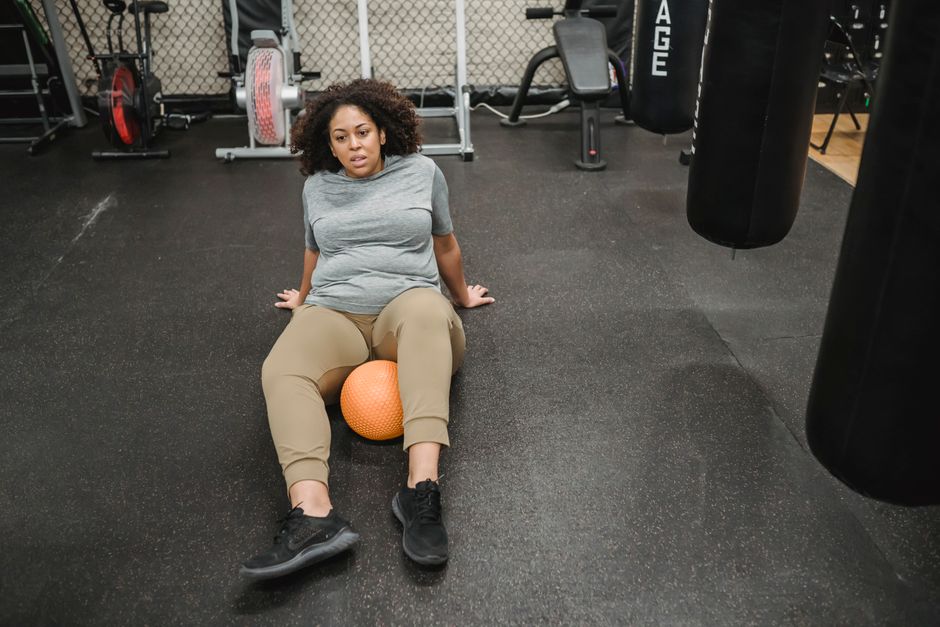
A strong leg catches your bodyweight when you trip. A weak one folds. That is why strength training for women over 40 is not separate from balance. It is the engine underneath it. Heavy work on your legs, hips, and core builds the muscle that turns a near-fall into a non-event.
Strength also protects what a fall would break. The same training that holds you upright builds your bone density, so the day you do go down, your hip does not shatter. And your grip strength after 40 tells the same story, one more plain marker that predicts how the rest of the body is aging. Balance, strength, and bone are one package. Train them together.
How to fit this into a real week
You are busy. I get it. This does not need a new hour in your day.
Stand on one leg while you brush your teeth, morning and night. That is two free balance sessions before breakfast. Then add two strength sessions a week where you lift real weight and learn to own your footing under load. That is it. Consistency beats a fancy program every time.
If standing on one leg makes you grab the wall today, good. That means you found the thing you have been ignoring. Now you get to fix it.
Frequently asked questions
How long should I be able to stand on one leg at my age?
A rough target is 30 seconds per leg through your 40s and 50s, easing toward 20 seconds in your 60s. If you cannot clear 10 seconds, that is your starting line, and the research on the 10-second mark says it is worth taking seriously.
Is balance genetic, or can I actually improve it?
You can improve it. Balance is a trainable skill that responds fast, often inside two to three weeks of daily practice. The NIA treats it as a type of exercise, not a gift you are stuck with.
Is it too late to start at 50 or 60?
No. Older adults improve their balance with practice at every age. The later you start, the more you have to gain, because that is exactly when fall risk climbs.
How often should I do balance exercises?
Daily is best, and it is easy because each rep takes seconds. Anchor it to something you already do, like brushing your teeth or waiting on the microwave.
Do I need special equipment?
No. A wall or counter for safety is all you need. Wobble boards and foam pads are extra credit, not the price of entry.
Are balance exercises safe if I have already fallen?
Yes, as long as you have something to hold and you start easy. If you have a medical condition or a recent injury, clear it with your doctor first, then train it under a coach who can watch your form.
Stop waiting until you fall to take this seriously
You do not get a warning before the fall. You get the fall. Train your balance now, while it is a 10-second game in your kitchen and not a hospital bill. First class is free. No card required. Show up Saturday at 9am. thefittpit.com


