
By Andre Thomas, NASM CPT | The F.I.T.T. PIT | June 18, 2026
Grip Strength After 40: The Longevity Marker Nobody Talks About
Your grip strength after 40 says more about your future than your weight, your BMI, or that smartwatch ring you keep closing. Most people never train it. They train arms in the mirror and ignore the hands that hold the whole thing together. That is a mistake, and today you are going to fix it.
What grip strength actually tells you about your body
Grip strength is not about crushing a stranger's handshake. It is a window into your whole-body strength. When researchers want a fast, cheap read on how strong someone is, they hand them a gripper and squeeze. The number that comes back tracks closely with total muscle mass and overall function.
Here is why that works. Your grip pulls on a chain that runs through your forearms, up your arms, across your back, and into your core. A weak grip usually means a weak chain. A strong grip usually means the rest of you has been working too. Age-related muscle loss, called sarcopenia, shows up in the hands and forearms just like it shows up in your legs and back.
So when your grip fades, it is rarely just your hands. It is a signal. And after 40, signals matter more than they used to.
Why grip strength predicts how long you'll live
This is the part that gets people to pay attention. A large international study tracking nearly 140,000 adults found that lower grip strength was linked to a higher risk of early death from any cause. Every drop in grip strength matched a measurable rise in risk.
Read that again. A handshake test predicted mortality better than blood pressure did in that data.
It is not magic. Grip is a proxy for how much usable muscle you carry and how well your nervous system fires it. People who stay strong tend to stay mobile, stay independent, and stay out of hospital beds. People who get weak fall more, recover slower, and lose the ability to do the small daily things that keep you living on your own terms.
You are not training grip to win a contest. You are training it to stay the person who carries her own groceries at 75.

What's happening to your grip after 40
Strength peaks in your 30s for most people. After that, without a reason to stay strong, the body sheds muscle it thinks it no longer needs. Without resistance training, you lose muscle and the strength that comes with it as the decades stack up.
The hands take a quiet hit. You notice it when jar lids fight back. When the heavy bag of dog food feels heavier than it used to. When your phone slips because your fingers got lazy.
And there is a hormonal piece for women. Around perimenopause, the body's ability to build and hold muscle takes a hit, which makes the slide faster if you do nothing about it. Doing nothing is the only real risk here. The grip responds to training at any age.
The three ways to train grip (that aren't a stress ball)
Squeezing a foam ball at your desk is not it. Your grip has three jobs, and you want to train all three.
First is crushing. This is closing your hand around something, like a thick dumbbell handle or a gripper. Second is holding, which is the one that matters most for real life. Holding means keeping your fingers locked around a load while it tries to pull free. Third is pinching, which is squeezing between thumb and fingers, like carrying a heavy plate or a weight by its edge.
The best news is that you build all three by lifting heavy things with your bare hands. Progressive resistance training, adding load over time, drives the strength gains. You do not need fancy gadgets. You need a reason to hold on.
Here is what actually works. Farmer carries, where you grab two heavy weights and walk. Deadlifts, where you hold a loaded bar without straps. Dead hangs from a bar, where you just hang and let your hands do the work. Rows and pull movements where you fight to keep your fingers closed. Do these, and the grip follows.
Stop using straps for everything
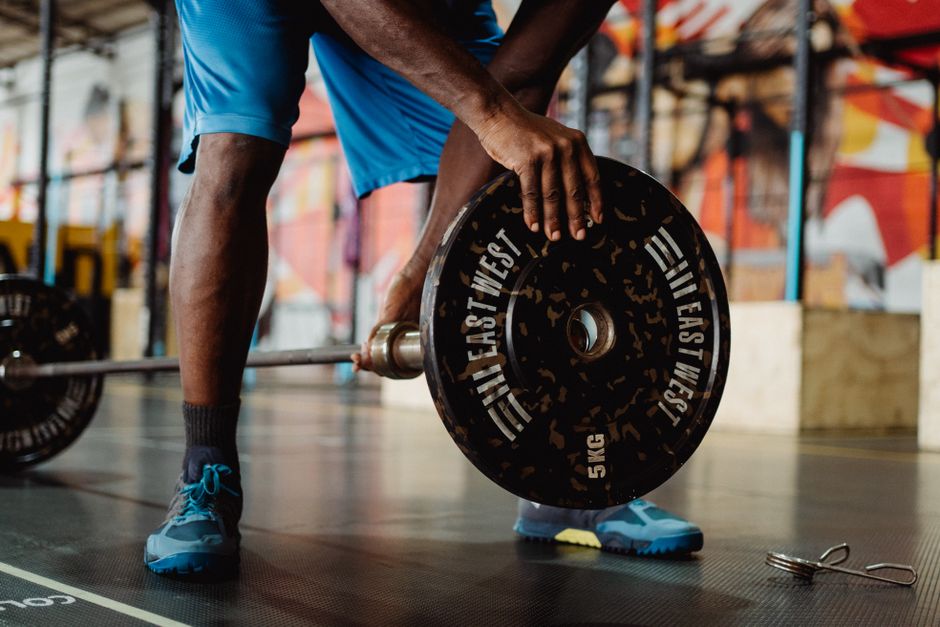
Lifting straps wrap around the bar so your hands do less work. They have a place for very heavy pulls. But if you strap up for everything, you are paying to skip the exact training your grip needs.
Drop the straps on your lighter sets. Let your hands earn the load. Yes, your forearms will burn. That burn is the work that keeps your hands strong for the next 30 years. Train weak hands and they stay weak. Train them under load and they get stubborn in the best way.
Same goes for those padded gloves. They feel nice and they steal the stimulus. Bare hands on the bar is part of the medicine.
How we build grip strength at the F.I.T.T. PIT
We do not run a separate grip class. We do not need to. Our StrengthCamp classes are built on heavy carries, deadlifts, hangs, and real loaded work. Your grip gets trained every session because we make you hold the weight.
This ties straight into the bigger fight, which is holding onto muscle after 40. Strong hands are the front edge of a strong body. When we coach strength training for women over 40, grip is never a side project. It is baked into every carry and every pull.
Take Selene. She walked into this gym overweight and unsure of herself. She stayed consistent, picked up heavy things week after week, earned her NASM cert, and went on to compete in strongman, an event built on grip. Strongman literally tests how long you can hold on. She built that from zero, the same way you will.

Frequently asked questions
How do I test my grip strength at home?
Grab a pull-up bar and hang with both hands. Time it. Under 30 seconds means you have work to do. Over a minute is a solid base. You can also notice the small stuff, like jars, bags, and luggage. If those got harder, your grip got weaker.
How often should I train grip after 40?
You do not need a dedicated day. Two to three strength sessions a week with heavy carries, deadlifts, and hangs will train your grip plenty. Hands recover fast, so a little goes a long way.
Will training grip make my hands look bulky?
No. You will build strength and a little forearm tone, not catcher's mitts. What you will get is hands that open jars, carry kids, and hold a heavy bar without quitting on you.
Is grip strength really linked to living longer?
The research points that way. In a study of nearly 140,000 adults, weaker grip strength tracked with a higher risk of early death. Grip is a stand-in for total strength, and strength keeps you mobile and independent as you age.
Can I train grip if I have arthritis or hand pain?
Often yes, but you train smart. We scale the loads and pick movements that do not flare the joint. A coach watching your form is the difference between training around pain and training into it. Start light and let the hand adapt.
Strong hands, long life. Come earn them.
Your grip is telling you something. Listen to it, then go change the number. StrengthCamp is heavy work for bodies that have lived. First class is free. thefittpit.com


