
By Andre Thomas, NASM CPT | The F.I.T.T. PIT | June 16, 2026
Strength Training for Beginners Over 40: Where to Actually Start
You want to start strength training for beginners over 40 but you have no idea where to begin. So you do nothing. You watch another video. You buy another pair of sneakers you will never sweat in. Stop. The body you have right now can lift weights today, and the longer you wait, the more it costs you.
Why starting strength training after 40 feels scary (and why that fear is lying to you)
You think you are too old, too weak, or too far gone. You are not. Your muscles do not check your birth certificate before they grow.
Here is the truth nobody hands you at 40. Starting now is not late. It is the smartest move you can make for the next 40 years of your life. After 40 your body loses muscle at a rate of 3 to 5 percent per decade if you do not train against resistance. That condition has a name. Sarcopenia. And the only thing proven to stop it is picking up something heavy on a regular basis.
So the fear is real. But it is pointed in the wrong direction. The scary thing is not starting. The scary thing is what happens if you do not. Read more about muscle loss after 40 and you will never skip a session again.
What strength training actually is (forget the bodybuilder pictures)
Strength training means you make your muscles work against a load. That load can be a dumbbell. It can be a resistance band. It can be your own body weight in a squat or a push against the wall.
You are not training to look like a magazine cover. You are training so you can carry groceries, climb stairs, and get off the floor without using a chair. That is real strength. And it matters more every year.
The research backs this up hard. The American College of Sports Medicine recommends resistance training at least twice a week for adults, and the benefit curve for people over 40 is steeper than it is for anyone in their twenties. You have more to gain because you have more on the line.
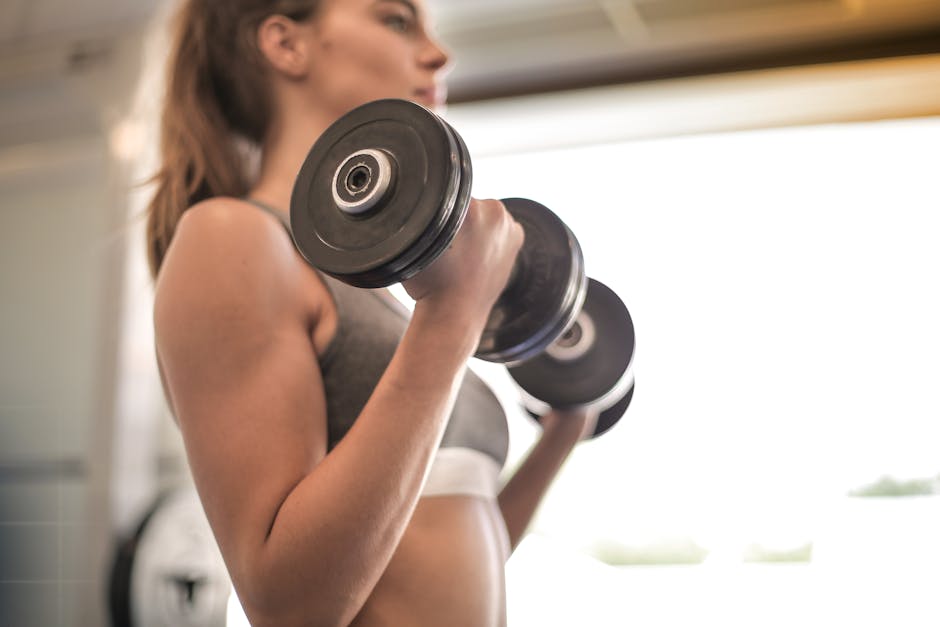
The mistake almost every beginner makes
You go too hard, too fast, on day one. You do a workout you saw online, you cannot walk for four days, and you quit. I have watched it happen a hundred times.
Soreness is not the goal. Progress is the goal. And progress comes from showing up again, not from destroying yourself once.
The fix is a principle called progressive overload. You start light. You add a little each week. Your muscles adapt to the demand and get stronger. Gradual increases in load drive the strength gains, not the punishment. Small and steady beats big and reckless every single time.
The five movements every beginner over 40 should learn
You do not need fifty exercises. You need five patterns that cover your whole body. Master these and you have a real program.
Squat. You sit down to a bench and stand back up. This trains your legs and hips, the muscles that keep you independent.
Hinge. You push your hips back and stand tall, like picking something off the ground with a flat back. This builds your backside and protects your spine.
Push. You press weight away from your chest or push the floor away in a modified plank. This is your chest, shoulders, and arms.
Pull. You row a weight toward your body or pull a band. This is your back, and it fixes the rounded posture a desk gave you.
Carry. You pick up something heavy and walk with it. This trains your grip, your core, and your whole body at once. Strength work also supports bone density, which matters a lot more for women after 40.

How often you should train when you are starting out
Two days a week. That is the answer. Not seven. Not a brutal split that eats your whole life.
Two full-body sessions a week, with a rest day between them, is enough to build real strength when you are new. Your body grows during recovery, not during the workout. Skip the rest and you skip the results.
As you get stronger you can add a third day. But you earn that. Start with two and stay consistent for a month before you change anything. Want the full breakdown? Here is how often you should work out over 40.
Why women over 40 should not skip the weights
For years women were told to stick to cardio and light pink dumbbells. That advice aged terribly. Cardio is fine, but it does almost nothing to stop the muscle and bone loss that comes with age.
Lifting will not make you bulky. Women do not have the hormone levels to pack on size the way men do. What lifting does is make you lean, strong, and capable. It is the single best thing you can do for your metabolism, your posture, and your confidence. Dig into strength training for women over 40 and you will see why we build our whole gym around it.
My coach Selene walked in overweight and self-conscious. She started lifting, stayed consistent, and now she competes in strongman and coaches other women from the same starting line. She did not start as an athlete. She became one. So can you.
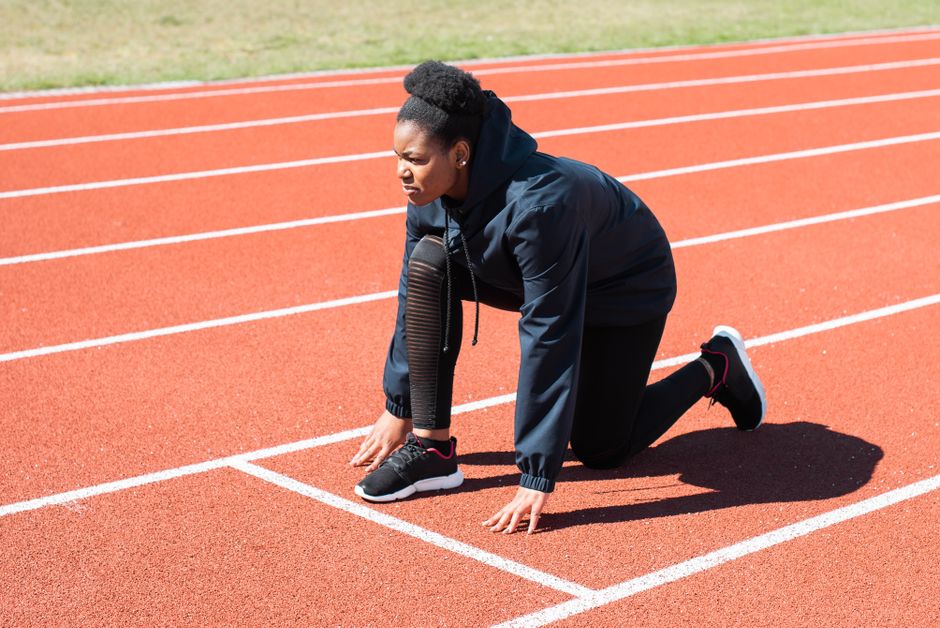
What your first month should actually look like
Week one, you learn the movements with light weight. You focus on form, not load. You leave the gym feeling like you could have done more. Good.
Week two, you add a small amount of weight to each lift. Week three, you add a little more. Week four, you start to feel something change. Your clothes fit different. The stairs feel easier. You sleep better.
That is the whole game. Show up twice a week, add a little each time, and let the months stack up. Most people quit before week four because they tried to do too much on week one. Do not be most people.
Frequently asked questions
Is it safe to start strength training at 40 or older?
Yes. For most adults, resistance training is one of the safest forms of exercise when you learn proper form and start light. If you have a medical condition, clear it with your doctor first. The Mayo Clinic recommends strength training for adults of all ages to protect muscle and bone.
How long until I see results?
You will feel stronger in two to three weeks. You will see changes in your body in six to eight weeks if you train twice a week and eat enough protein. Strength comes faster than you think when you are new.
Do I need a gym or can I start at home?
You can start at home with a couple of dumbbells and a band. But a coach who watches your form and adjusts your load will get you there faster and safer. Most beginners plateau or get hurt because nobody is watching.
How much weight should a beginner use?
Light enough that the last two reps of a set feel hard but your form stays clean. If you cannot hold good form, the weight is too heavy. If ten reps feel easy with room to spare, go heavier next time.
How much protein do I need to build muscle after 40?
Aim for around 0.7 to 1 gram of protein per pound of body weight. Older muscle needs more protein to respond to training, a thing researchers call anabolic resistance. Eat protein at every meal and your results show up faster.
Will lifting weights make me bulky?
No. Building large muscle takes years of heavy training, high calories, and hormone levels most women do not have. Lifting makes you lean and strong, not big.
Stop researching. Start lifting.
You have read enough articles. The first week is the hardest part, and it gets easier from there. You do not have to figure this out alone, and you should not.
Semi-private training is 2 to 4 athletes with one coach. Most popular is 2x per week at $740 per month. You get real coaching, real form checks, and a program built for your body, not a stranger's. Book a call with Andre. thefittpit.com


