
By Andre Thomas, NASM CPT | The F.I.T.T. PIT | May 24, 2026
Progressive Overload for Women: The One Principle That Actually Changes Your Body
You can show up three days a week for a year and look exactly the same. I have watched it happen. The reason is simple. You never made the work harder. Progressive overload for women is the principle that separates the people who change from the people who just sweat. And most of you are skipping it.
What progressive overload actually means
Progressive overload means you ask your body to do a little more over time. More weight. More reps. More sets. Harder movements. Less rest between them.
That is the whole idea. Your muscles adapt to the demand you place on them. So if the demand never goes up, neither does your strength. Research on resistance training adaptations shows that muscle grows in response to increasing mechanical tension, not repetition of the same easy work.
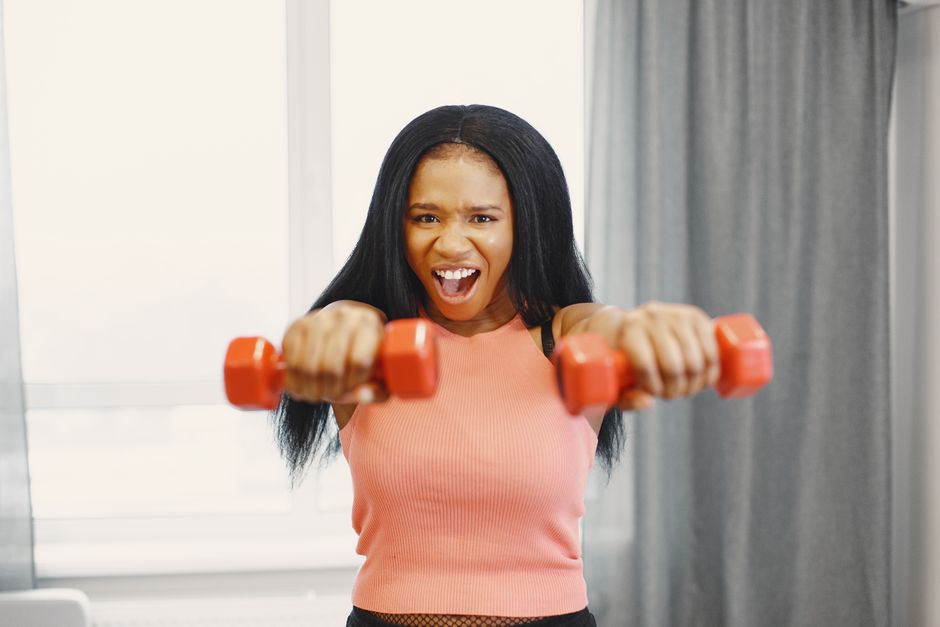
Picture two women. One curls the same ten-pound dumbbells every week for a year. The other adds a rep here, a pound there, a set when she is ready. After twelve months they are not the same person. The second one got stronger because she kept moving the target.
Your body is not stupid. It does exactly what you train it to do. Give it the same workout forever and it learns to do that workout with less effort. That is the opposite of what you want.
Why progressive overload for women over 40 matters more, not less
Here is the part nobody likes to hear. After 40 your body starts shedding muscle on its own. The clinical name is sarcopenia, the age-related loss of muscle mass, and it costs you roughly three to five percent of your muscle per decade if you do nothing about it.
Read that again. Doing nothing is not neutral. Doing nothing is going backward.
So when a woman over 40 lifts the same light weights for months, she is not maintaining. She is losing ground slowly while feeling like she is doing the right thing. The body needs a real reason to keep the muscle you have, and an even bigger reason to build more. That reason is load that goes up.
This is also why muscle loss after 40 is not a sentence you have to accept. The fix is in your hands. You just have to make the work harder on purpose. Harvard Health reports that strength training also protects bone density, which matters a lot more once the hormonal shift of your forties and fifties hits.
The five ways to add load (it is not just heavier weights)
Most people think progressive overload means slapping more plates on the bar. That is one way. It is not the only way, and for a lot of women it is not the first one.
You can progress in five ways:
- Add weight. Same reps, heavier load.
- Add reps. Same weight, one or two more reps per set.
- Add sets. Three sets becomes four.
- Slow the tempo. A three-second lower under control is harder than a fast one.
- Cut the rest. Same work, less recovery between sets.
Pick one. Change one thing at a time. If you add weight, reps, and sets all in the same week, you will be too sore to train and you will not know what worked. The skill is in the small, boring increases that stack up over months. That is how strength training for women over 40 actually delivers.
How to track it without losing your mind
You cannot progress what you do not measure. If you walk into the gym and grab whatever dumbbell feels right that day, you are guessing. And guessing does not get stronger.
Write it down. A note on your phone works fine. Track the exercise, the weight, the sets, and the reps. Next session you look at last week and you try to beat it by a little.
You will not beat it every single time. Some days you slept badly or you are stressed or your body is tired. That is normal. The goal is the trend over weeks, not a personal record every session. The American College of Sports Medicine recommends resistance training at least twice a week for all major muscle groups, and a log is what keeps those sessions honest.
The mistakes that stall everything
I see the same errors over and over. The first is adding load too fast. You jump from ten pounds to twenty-five because you felt good one day. Your form falls apart and you tweak your shoulder. Now you are off for three weeks.
The second mistake is the opposite. You stay comfortable forever. The weight never feels hard, so your body never has a reason to change. Comfortable is where progress goes to die.
The third is chasing soreness as proof. Being sore means you did something different, not that you did something useful. You can be sore from a workout that builds nothing. Train for the number on the log, not the ache the next day.
And the last one is quitting a movement before it pays off. Real strength gains take weeks of repeated, slightly harder effort. If you swap your whole program every two weeks because you saw a new exercise online, you reset the clock every time.
How we coach progressive overload at the F.I.T.T. PIT
At our gym in Hyde Park, every member has a number to beat. Our coaches write the loads and track them with you so the progression is built in, not left to chance.
Selene Williams coaches a lot of our women, and she lived this. She walked in overweight and self-conscious, stayed consistent, and kept adding load week after week. She earned her NASM cert, competed in strongman, and earned a pro bodybuilding card. She did not get there with light weights and good intentions. She got there because the work kept getting harder and she kept showing up.
That is the entire game. Show up, add a little, write it down, repeat. Do that for six months and you will not recognize your own strength.
Frequently asked questions
How fast should I add weight?
Slow. When you can hit the top of your rep range with good form for two sessions in a row, go up by the smallest jump available. For dumbbells that is often five pounds. For smaller muscles, two and a half. Earn the increase, do not force it.
Will progressive overload make me bulky?
No. Women do not have the hormone levels to build large amounts of muscle by accident. Progressive overload builds the lean, strong look most women are actually after. You will get tighter and stronger, not huge.
Can I use progressive overload with bodyweight exercises?
Yes. Add reps, slow the tempo, or move to a harder version of the movement. A push-up on your knees progresses to a full push-up, then to feet elevated. The load principle still applies even with no equipment.
What if I stop getting stronger?
Plateaus are normal. When the log stalls for a few weeks, change the variable you have been ignoring. If you have only been adding weight, try adding a set or slowing the tempo instead. Sometimes you also need more sleep and more protein, not more effort in the gym.
How often should I train to see this work?
Two to three strength sessions a week is plenty for most women over 40. Consistency over months beats intensity for a week. The body rebuilds between sessions, so rest is part of the program, not a break from it.
Is this safe if I have joint issues?
For most people, controlled strength training with the right load is one of the best things you can do for cranky joints. Start light, build slow, and work with a coach who can adjust the movements. If you have a diagnosed condition, clear it with your doctor first.
Stop guessing. Start adding load.
If you have been doing the same workout for months and wondering why nothing changes, now you know. The weight never went up, so neither did you.
Come see how we coach it. StrengthCamp is heavy work for bodies that have lived. First class is free. thefittpit.com


