By Andre Thomas, NASM CPT | The F.I.T.T. PIT | June 2, 2026
Free Weights vs. Machines: What's Actually Better for Women Over 40?
Everyone has an opinion on free weights vs. machines for women. Trainers argue about it. Reddit argues about it. That guy at your gym who hasn't changed his program in fifteen years definitely has an opinion. Here's the actual answer — and it's probably not the one you're expecting.
What the free weights vs. machines debate is actually about
The debate misses the point. It's not about which is better in the abstract. It's about what your body needs at this stage of your life — and what your goals actually are.
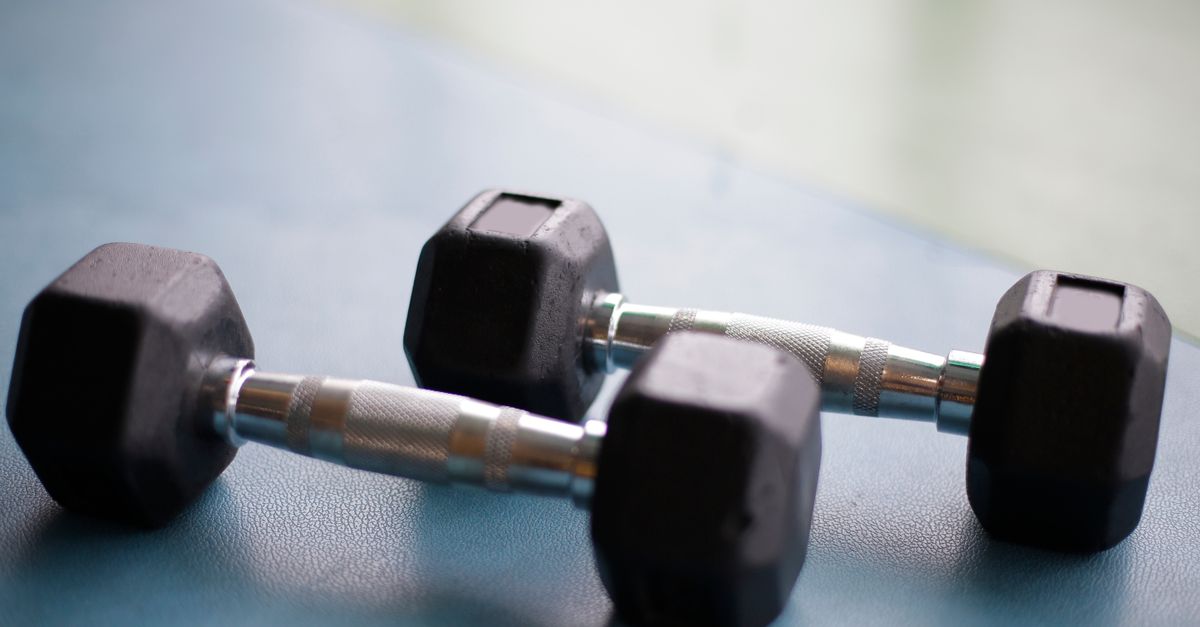
Free weights include dumbbells, barbells, and kettlebells. Machines guide your movement through a fixed path. Both build muscle. Both have a place in a well-designed program. But they don't do the same thing, and they don't serve the same purpose.
If you're over 40 and trying to get stronger, lose fat, and stay out of physical therapy — the question isn't which one is better. It's when to use which one, and why.
What free weights do that machines simply can't
When you pick up a dumbbell, your body has to stabilize the weight. Your shoulder, core, hip, and ankle muscles all fire just to keep you upright and balanced. That's not a bug — it's the point. Research shows free weights recruit significantly more stabilizer muscles than machine-based exercises, which matters a lot when you're trying to build functional strength you can actually use in real life.
Machines remove that stabilization demand. The path is fixed. Your job is just to push or pull. You'll build the primary muscle, but the supporting cast doesn't get nearly the same work.
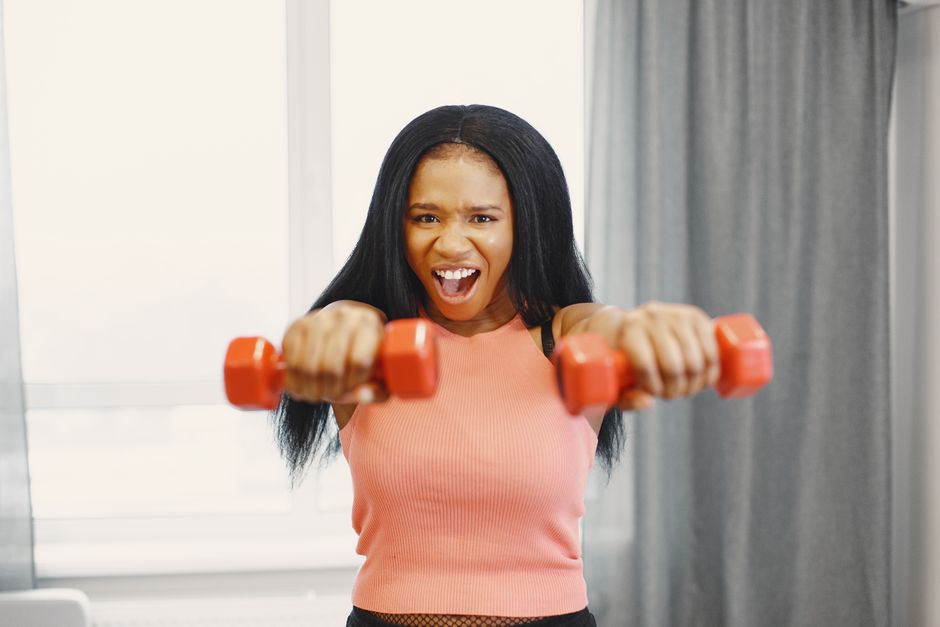
Free weights also train your body through movements, not just muscles. A goblet squat, a Romanian deadlift, a single-arm row — these teach your body how to move under load. That transfers to carrying groceries, climbing stairs, getting off the floor. Machines rarely do.
And because free weights require coordination and balance, they keep your nervous system sharp. Harvard Health notes that compound, multi-joint strength training supports neuromuscular health — which matters more the older you get.
Where machines actually make sense
Machines are not worthless. They're a tool. And sometimes they're the right tool.
If you're coming back from an injury, a machine gives you a controlled range of motion that lets you load a muscle without asking damaged tissue to stabilize anything. That's not weakness — that's smart rehab.
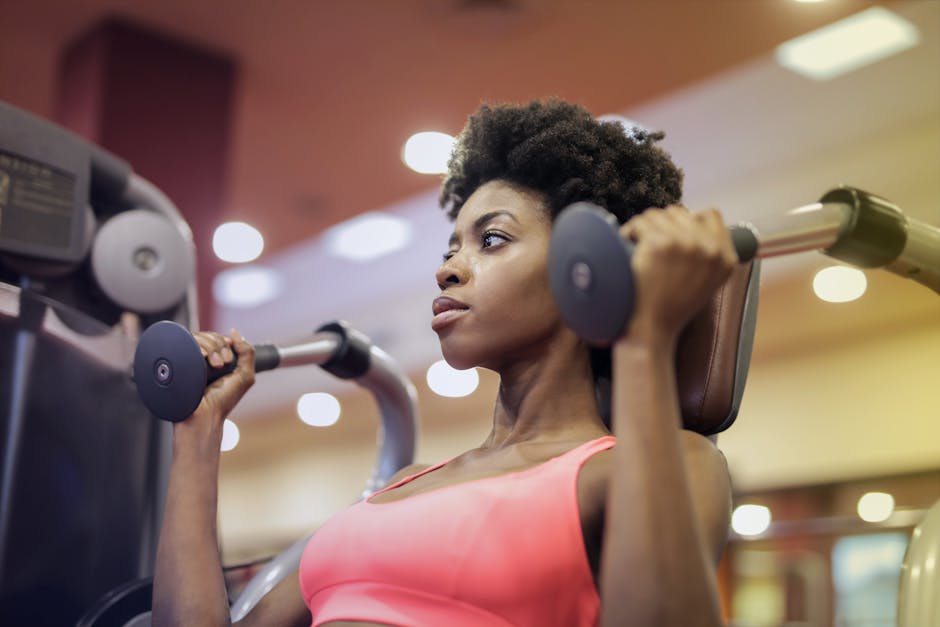
Machines are also useful for isolation. The leg extension machine does one thing: works your quads. If you need extra quad work or want to bring up a lagging muscle group, isolation machines have a place. Same for cables when targeting rear delts, biceps, or triceps.
And honestly? Machines are less technically demanding. If you're brand new to training or returning after years off, starting on machines while you build baseline strength and body awareness is completely reasonable. The problem isn't starting on machines. It's staying on them forever because free weights feel scary.
Why this matters more after 40 than it did in your 30s
After 40, your body loses muscle at an accelerating rate. The NIH estimates adults lose 3 to 8 percent of muscle mass per decade after 30, with that rate accelerating after 60. That's sarcopenia — and it doesn't care what your intentions are. You either fight it with resistance training or you lose the fight by default.
Free weights — specifically compound lifts like squats, deadlifts, rows, and presses — create the most hormonal and neuromuscular stimulus for muscle retention and growth. The American College of Sports Medicine recommends progressive resistance training as the primary tool for preventing sarcopenia in middle-aged adults.
Balance also starts to degrade after 40 if you don't actively train it. Free weight training forces your stabilizers to work every session. That means better balance, better posture, and lower fall risk — which sounds boring until you slip on ice and realize your reflexes actually saved you.
Read what we've written about muscle loss after 40 if you want the full picture on why this matters. It connects directly to the training choices you're making right now.

The F.I.T.T. PIT answer: use both, but in the right order
At the F.I.T.T. PIT, we don't pick sides. We use free weights as the foundation of every program — squats, hinges, rows, carries, presses — and add machines and cables where they serve a specific purpose.
In StrengthCamp, every session is built around compound free weight movements first. You squat. You deadlift. You press. You row. Isolation work comes after the big stuff is done. That's the order that makes sense when the goal is getting stronger and staying that way.
Our clients who had never touched a barbell — women in their 40s, 50s, and 60s — now deadlift their body weight and think nothing of it. It didn't happen because they spent three years on the leg press. It happened because we taught them to move correctly with free weights from day one.
For a deeper look at what's actually happening in your body, start with our guide to strength training for women over 40. The free weights vs. machines question makes a lot more sense once you understand what resistance training is actually doing physiologically.
How to start with free weights if they make you nervous
Start light. Embarrassingly light. A 10-pound dumbbell is not beneath you — it's a starting point. Form comes before load. Always.
Learn four movements: a squat pattern (goblet squat), a hinge pattern (Romanian deadlift), a push (dumbbell press), and a pull (dumbbell row). Master those four and you have a complete program. Everything else is detail work on top of those.
Get coached. Not because you can't figure it out yourself — but because one session with a coach who knows what they're looking at will shorten your learning curve by months. A trainer watching you squat for thirty minutes is worth more than a month of YouTube tutorials. And when you understand how your metabolism responds to strength training after 40, it makes the investment even easier to justify.
Frequently asked questions
Are free weights better than machines for fat loss?
Free weight compound exercises burn more calories during and after the workout because they recruit more muscle groups at once. The excess post-exercise oxygen consumption (EPOC) effect is greater with multi-joint compound movements than with isolated machine work. For fat loss, compound free weight training plus a calorie deficit is the standard approach.
Can I get strong using only machines?
You can build muscle on machines. But you won't build the same functional, stabilizer-inclusive strength you get from free weights. For most women over 40 whose goals include both strength and real-world movement quality, machines alone won't get you there.
Are free weights safe for women over 40?
Yes — with proper coaching and progressive loading. The risk isn't the free weight itself. It's bad form, too much weight too soon, and nobody watching. That's why coaching matters. NASM-certified trainers are trained to teach safe movement patterns to people at every age and fitness level.
Which is better for beginners: free weights or machines?
Both have a role. Machines can help you understand how a movement feels before you add stabilization demands. But don't stay on machines indefinitely — learn the basic free weight patterns as soon as you're ready. The longer you wait, the more the machine-only habit gets ingrained.
Does the order matter when using both free weights and machines in the same session?
Yes. Do your compound free weight movements first when you're fresh. Save machines and isolation work for the end of the session. Doing leg extensions before squats because the machine was open is backwards — you'll gas the quads before the movement that actually matters.
What free weights should a woman over 40 start with?
Dumbbells. Get a pair of 8s, 12s, and 15s. That range covers most movements for most beginners. Add a kettlebell (16kg is a solid starting point for swings and carries) when you're ready. You don't need a full rack — you need consistency with what you have and someone who knows how to program it.
Ready to stop guessing and start lifting right?
StrengthCamp is heavy work for bodies that have lived. First class is free. thefittpit.com


